In a recent meeting, business, digital and UX were in the same room. The request from business was to increase sales. I asked four questions about the numbers. Which sales: total revenue, conversion rate or average basket? What is the current figure, and what is the target? By when, and at what cost? Which customers, and which segment is the business aiming for?
Business did not have the answers to all of them. That let the group reframe the subject before talking about solutions.
I recently read Business Thinking for Designers and started using it in meetings. It describes a solution through three questions. Is it desirable for customers? Is it viable for the business? Is it feasible for the team? The book places competitive advantage where the three overlap.
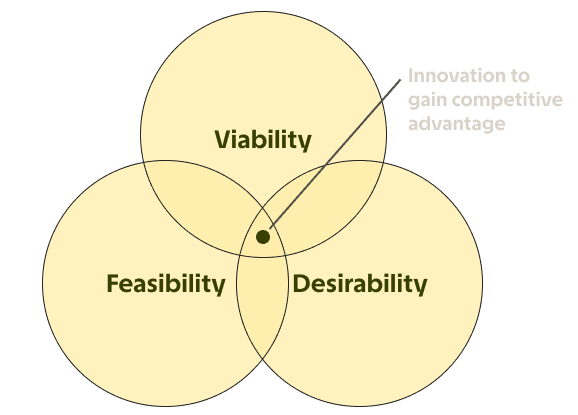
In this frame, desirability means adoption: what customers actually need and want, rather than aesthetics. It also makes a design decision easy to tie to a number such as retention, conversion or cost. Business and product teams already use those numbers for their own decisions.